

Marketing leaders are being asked to solve two difficult problems at once: create experiences customers genuinely value, and prove those experiences produced meaningful business results.
Attention alone is no longer enough
Impressions, reach, and foot traffic can show that people had an opportunity to notice a brand. They do not prove that anyone cared, acted, or came back. When attention cannot be connected to action, marketing can look like an expense instead of an investment.
At the same time, customers have become highly selective. They ignore ordinary promotions, avoid unnecessary forms, and quickly forget messages that offer them nothing in return. More noise is not the answer. The experience has to earn their attention.
The gap between customer experience and marketing attribution
A customer may spend several minutes inside a location, visit an event booth, wait for service, or interact with a campaign. Those moments have real potential, but they often disappear without creating an identifiable relationship or measurable next step.
That creates a costly gap. Leadership wants growth, qualified leads, stronger loyalty, repeat business, and measurable return on marketing investment. Marketing teams need a practical way to connect the customer experience to those outcomes.
Proving marketing moved people means showing the journey from attention to action.
Give customers value before asking for action
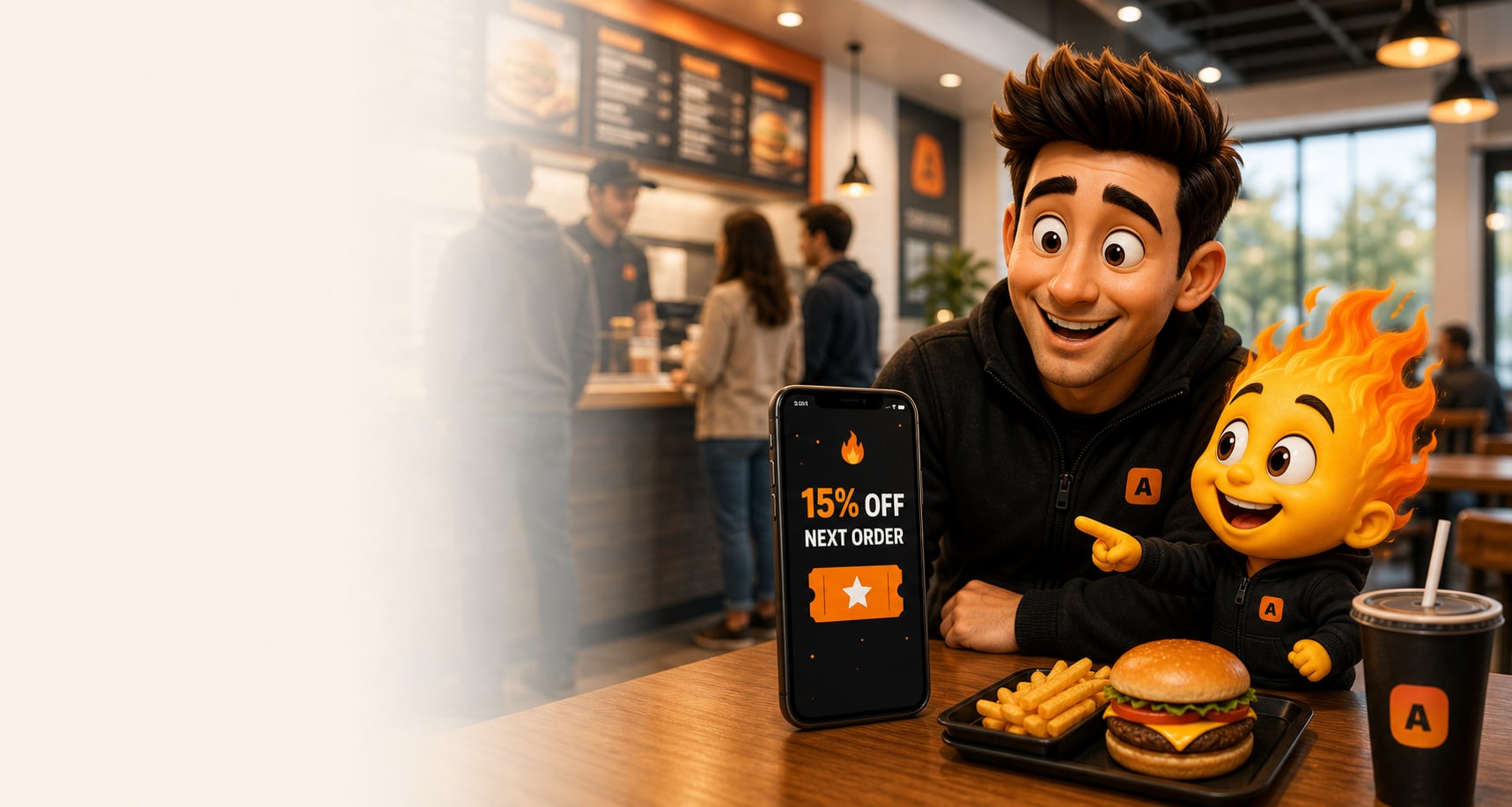
Interactive branded experiences change the value exchange. Instead of asking customers to stop what they are doing and look at an advertisement, a business gives them something enjoyable to do. Play earns attention. A relevant reward creates a reason to act. The resulting engagement creates a measurable signal.
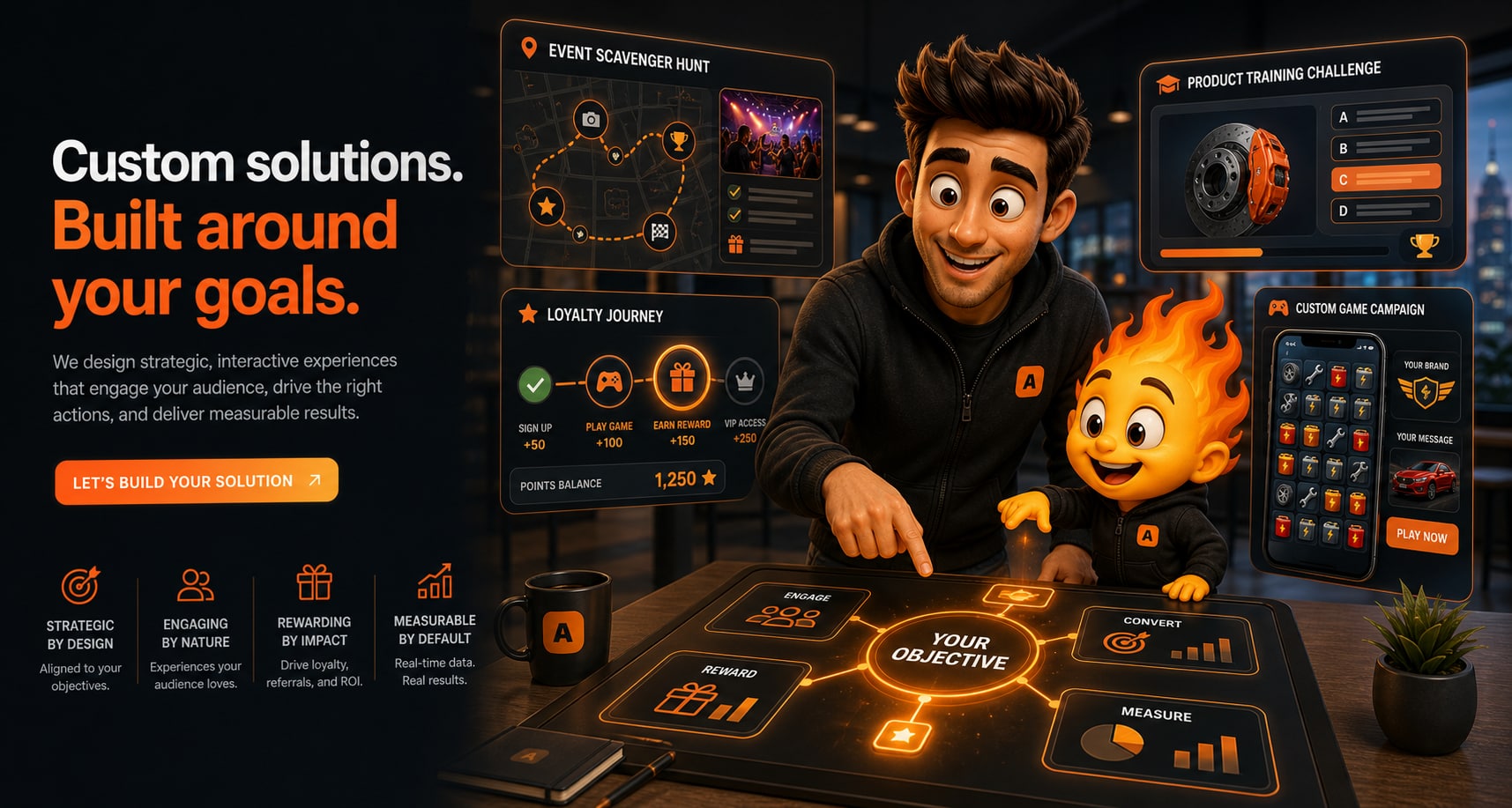
When designed properly, the experience can help build an opted-in audience, issue trackable rewards, encourage return visits, and show which campaigns produced results. The customer gets an experience worth their time. The marketing team gets evidence worth reporting.
What marketing leaders should be able to prove
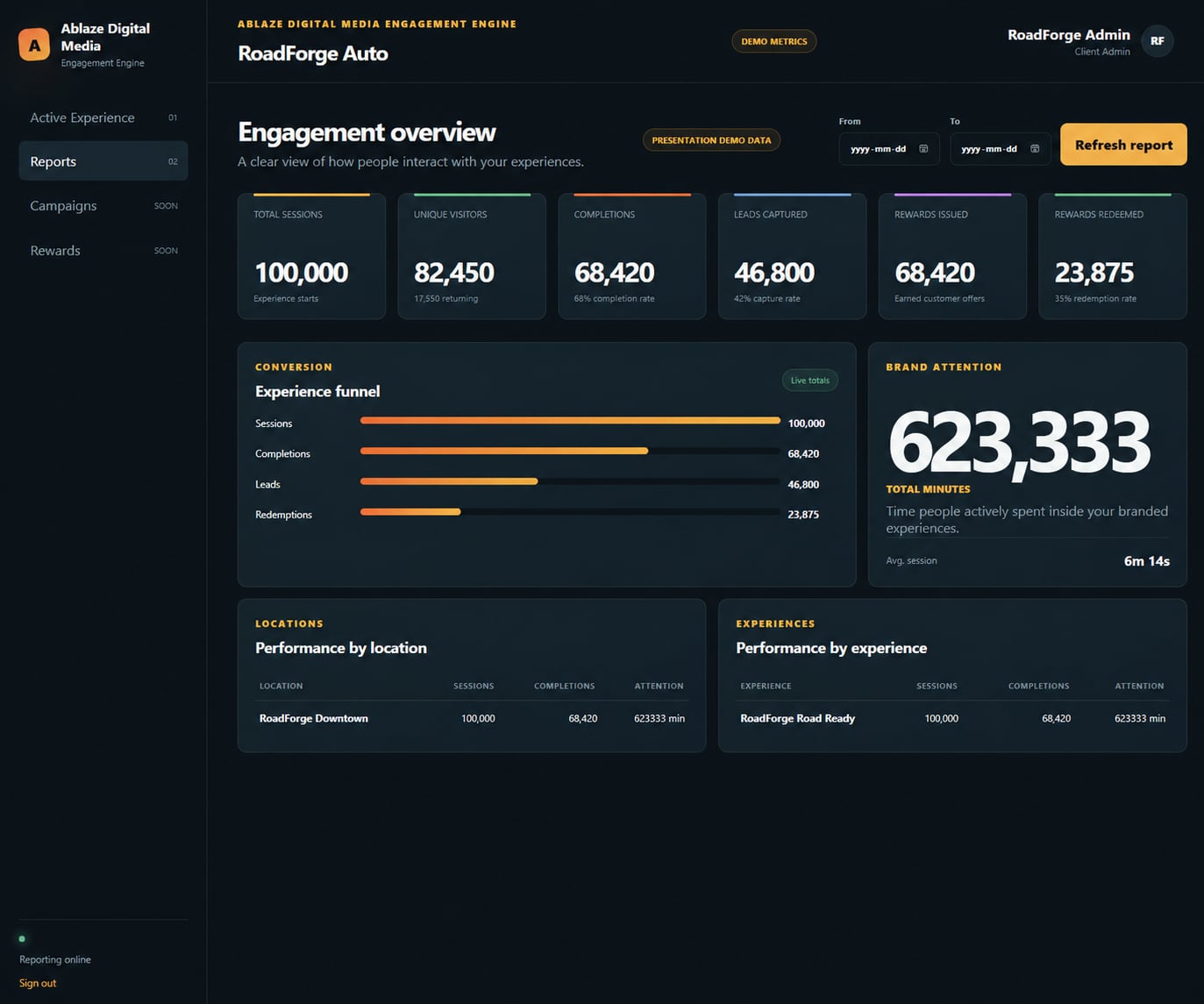
- How many customers chose to engage
- How long they spent with the branded experience
- How many completed the intended journey
- How many opted in for future communication
- How many rewards were claimed and redeemed
- Which experiences created a measurable next action
Customer engagement that satisfies both audiences
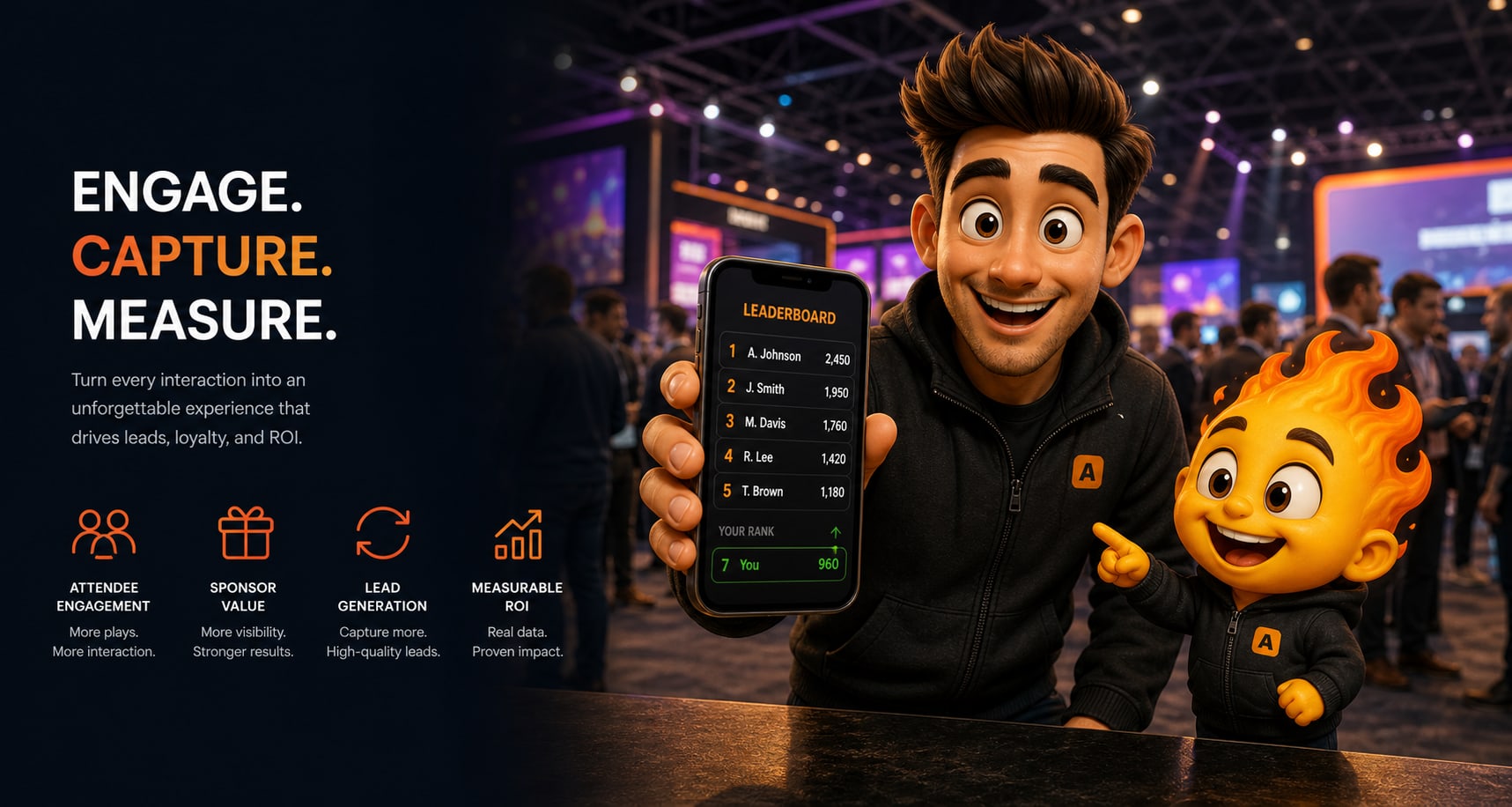
The best marketing does not force a choice between customer experience and business performance. It creates an interaction customers willingly participate in and a result leadership can clearly understand.
That is the opportunity Ablaze was built around: experiences worth customer attention, connected to actions marketing leaders can measure and prove.